Host a Workshop Event in Malaysia
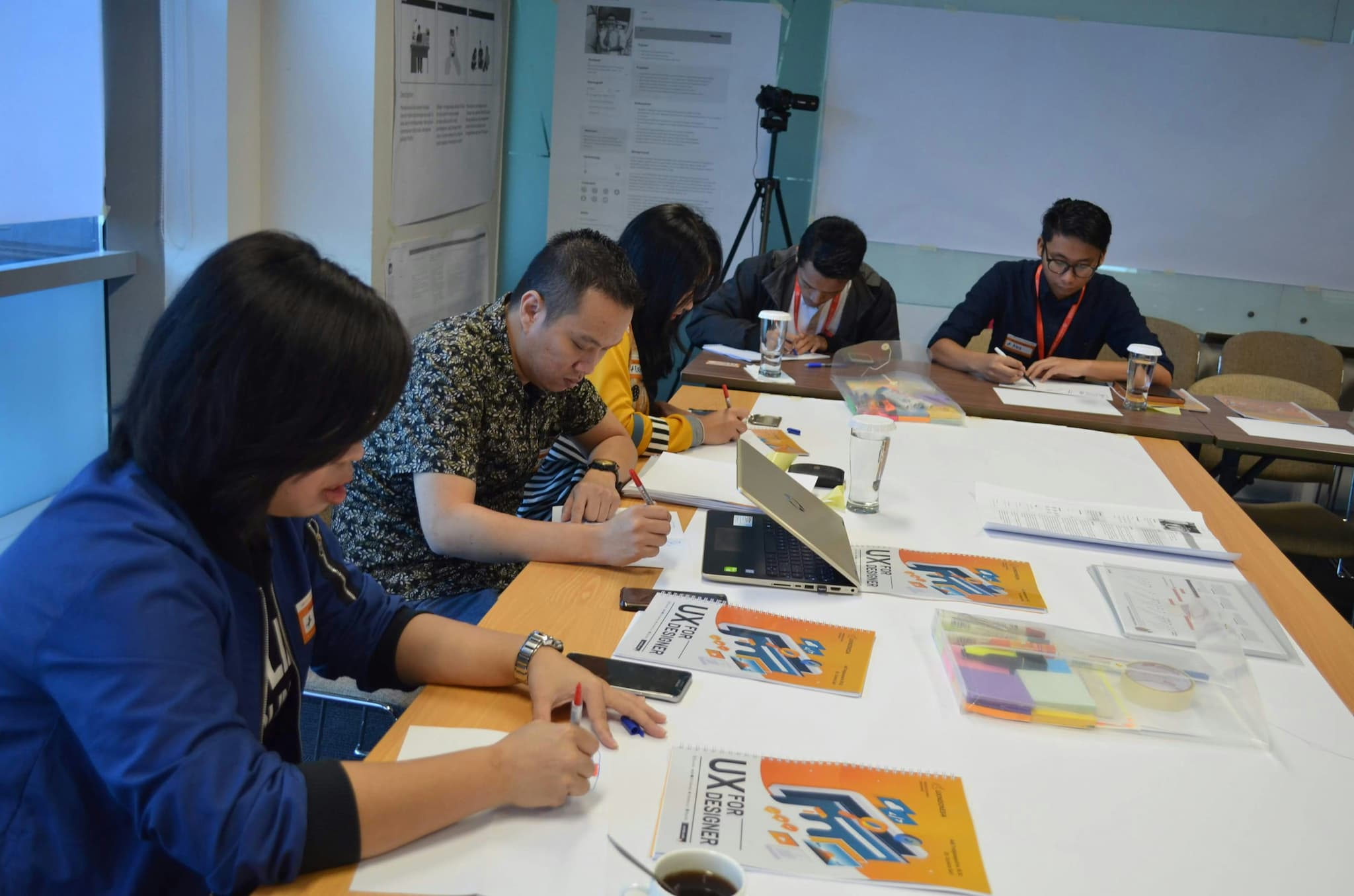
Host a Workshop Event in Malaysia
Book a workshop event space in Malaysia for company training days, public classes and masterclasses. Zero booking fees and direct host contact.


What Are the Top Workshop Event Spaces in Malaysia?
Workshop event spaces in Malaysia host corporate training days, public and ticketed classes, brand masterclasses and hands-on maker sessions. The clusters sit in Bukit Bintang, Pasar Seni, KL Sentral, Mid Valley, Bangsar South, Petaling Jaya, Subang Jaya and George Town. Hire runs from RM 250 to RM 6,000 per session.
- Co-working and training rooms: half-day blocks with a projector, whiteboard and flat floor, from RM 250.
- Creative studios and maker spaces: worktables, a sink and daylight for hands-on sessions.
- Cafe and kitchen event spaces: a working kitchen with seating, quoted on a minimum spend.
- Gallery and shophouse floors: an open floor for masterclasses and showcase sessions.
- Seminar rooms and event halls: staged seating, a house PA and a lobby for the registration table.
- Rooftop and standalone event spaces: a whole-venue booking for a brand masterclass or launch session.
The host quotes you directly, and what's on the listing is what you'll pay.
 12 Venues Found
 Featured Venue
Venue Price from RM2,600/ Min spend
The Timber Space
 100
100 72
72 3 rooms
 Online nowFeatured Venue
Venue Price from RM4,000/ Per hour
Evolt Karting - Selangor (Flagship)
100953 roomsOnline nowFeatured VenueVenue Price from RM1,089/ Min spend
Motion Studio Asia (Mid Valley)
60604 roomsOnline now New
NewVenue Price from RM200/ Per hour
KL Comedy Event Space
50501 roomOnline nowNewVenue Price from RM100/ Min spend
Napa Authentic Thai Cuisine
120120NewVenue Price from RM98/ Per pax
Thai Co Restaurant
300300 Response time within 3 minsFeatured Venue
Venue Price from RM240/ Min spend
WeWork Mercu 2
60407 roomsOnline nowFeatured VenueVenue Price from RM5,000/ Min spend
Tribeca Serviced Hotel by Millennium
3502802 roomsOnline nowFeatured VenueVenue Price from RM3,000/ Min spend
The Ark Plus
500400Online nowFeatured VenueVenue Price from RM1,600/ Per half-day
Butter Studio & Space
10080Online nowFeatured VenueVenue Price from RM10,000/ Min spend
THE EXPERIENCE
1100450Online nowVenue Price from RM8,000/ Min spend
The Grey Box (GMBB)
2501504 roomsOnline nowThis is the final venues in the Event type list.
Can't spot your venue? Share it with us — we'll do our best to get it listed.
What Are the Top Workshop Event Spaces in Malaysia?
Workshop event spaces in Malaysia host corporate training days, public and ticketed classes, brand masterclasses and hands-on maker sessions. The clusters sit in Bukit Bintang, Pasar Seni, KL Sentral, Mid Valley, Bangsar South, Petaling Jaya, Subang Jaya and George Town. Hire runs from RM 250 to RM 6,000 per session.
- Co-working and training rooms: half-day blocks with a projector, whiteboard and flat floor, from RM 250.
- Creative studios and maker spaces: worktables, a sink and daylight for hands-on sessions.
- Cafe and kitchen event spaces: a working kitchen with seating, quoted on a minimum spend.
- Gallery and shophouse floors: an open floor for masterclasses and showcase sessions.
- Seminar rooms and event halls: staged seating, a house PA and a lobby for the registration table.
- Rooftop and standalone event spaces: a whole-venue booking for a brand masterclass or launch session.
The host quotes you directly, and what's on the listing is what you'll pay.
Guide to Workshop Event Spaces in Malaysia
A workshop event space in Malaysia is a room booked around a session rather than by the hour, with hire from RM 250 to RM 6,000 per session. The rate follows the block you book, the setup you need and the catering you add.
This guide sets out what a company booking adds, how half-day and full-day blocks are priced, and what the quoted rate covers. It also covers catering, the room spec, the door on the day and the Malaysian tax and levy rules that shape the invoice.
Corporate Workshop Venues in Malaysia: What a Company Booking Adds
A corporate workshop booking differs from a hobby class in three ways: an invoice to a company, a fixed run of day, and a levy claim behind it. That changes what you ask the venue for before you sign.
- Company invoicing: ask for a quotation in the registered company name, with the service tax line shown separately.
- Breakout capability: a second room or a dividable floor for syndicate work, which most corporate training venues in Malaysia can price as an add-on.
- Levy-claimable paperwork: a dated tax invoice and the venue's business registration number, both needed for an HRD Corp claim.
- Facilitator kit: flipcharts, markers, a lapel microphone and a confidence monitor, rarely included by default.
- Activity space: sessions that end in a group exercise work better at team building venues in KL with an open floor.
- Nine shortlisted rooms: the best event spaces in Kuala Lumpur for corporate workshops are compared on breakout rooms and AV support.
- Offsite framing: a workshop paired with a planning day reads as an offsite meeting venue in Malaysia booking.
Half-Day and Full-Day Workshop Blocks: How Session Length Is Priced
Malaysian venues price a workshop by the block, not the hour, once the session passes three hours. A half day is four hours and a full day is eight, and both usually run 9am to 1pm or 9am to 5pm.
- Hourly, three-hour minimum: the common floor at co-working rooms, where co-working spaces in Kuala Lumpur start from RM 60 an hour.
- Half-day weekday block: the cheapest way to run a four-hour session, and the rate most often quoted in Kuala Lumpur.
- Full-day block: eight hours with a lunch break built in, which is what a levy-claimable training day needs.
- Setup time: usually counted inside the block, so add an hour to the booking rather than to the agenda.
- Weekend loading: Saturday rates run above weekday rates at most venues, and Sunday availability is thinner.
- Seminar-style seating: a lecture format for a longer programme suits a training space for rent for seminars and workshops.
Workshop Packages and Price Lists: What the Quoted Rate Covers
A Malaysian workshop quotation usually carries three lines: room hire, equipment and food. Reading them apart is what stops a RM 900 room turning into a RM 2,400 invoice.
- Room hire: the block rate, with chairs, tables, air conditioning and house Wi-Fi almost always included.
- Standard AV: projector or screen, a house PA and one wired microphone, included at most seminar rooms and charged at studios.
- Extra equipment: additional microphones, a second screen, extra flipcharts and any live-streaming rig, all quoted per item.
- Food and drink: priced per head and added to the room line, never inside it.
- Deposit: 30% to 50% on confirmation is the norm, with the balance due on or before the session date.
- Tight budgets: the lower end of the market sits with budget event spaces in Malaysia, where the room carries less kit.
- Six worked comparisons: selection criteria and booking tips are laid out in this guide to meeting venues in Malaysia for corporate training and workshops.
Workshop Event Pricing in Malaysia by Venue Category
The bands below are per session for venue hire and hold across the Klang Valley. Rates run lower in Penang, Ipoh and Johor Bahru, and higher for a Saturday date in the city centre.
- Hire is quoted per block: a half day is four hours and a full day is eight, so compare like for like.
- Minimum spend replaces hire: cafes and kitchen spaces put the whole budget on food and drink instead.
- Tax sits on top: a quoted rate is often shown before the 6% service tax line.
| Venue Category | Price Band (Per Session) |
|---|---|
| Co-working or training room, half-day block | RM 250 to RM 900 |
| Creative studio or maker space, half-day block | RM 400 to RM 1,500 |
| Cafe or kitchen event space, on minimum spend | RM 500 to RM 2,000 |
| Gallery or shophouse floor, full-day block | RM 800 to RM 2,500 |
| Seminar room or event hall, full-day block | RM 1,200 to RM 4,000 |
| Rooftop or standalone event space, whole venue | RM 2,000 to RM 6,000 |
| Catering, per guest | From about RM 49 |
Workshop Catering in Malaysia: Tea Breaks, Working Lunches and Kitchen Access
Food is the line most workshop hosts underestimate. A four-hour session needs one tea break, and an eight-hour day needs two plus lunch.
- Tea break: kuih, fruit and coffee, the Malaysian default for a mid-morning pause.
- Working lunch: a set box or a simple buffet, from about RM 49 a guest on Malaysian listings.
- Levy-capped meals: HRD Corp allows RM 15 to RM 25 per trainee per training day, so a costlier menu is part-funded by the company.
- External caterer: permitted at many independent spaces, sometimes against a kitchen fee, and rarely at hotels.
- Kitchen access: needed for a cooking session, which is what cooking workshop venues in Malaysia are set up for.
- Tasting formats: a brew bar for coffee workshop venues in Malaysia, or hot-water service for tea workshop venues in Malaysia.
- Caterer sourcing: where the venue has no kitchen, book from the caterers and event vendors in Malaysia marketplace.
Workshop Facilities in Malaysia: The Room Spec Hosts Confirm in Writing
These are the attributes a Malaysian venue is asked to put in writing before a workshop booking is confirmed. Ranges reflect what is normal across the market rather than any single property.
- Movable tables: a fixed boardroom table rules out group work, so ask for the layout in writing.
- Mess tolerance: clay, paint and resin need a sink and a floor the venue is happy to see covered.
- Daylight: north-facing windows carry a hands-on session better than downlights, and studio space for rent in Malaysia is built around it.
- Power and extraction: soldering, woodwork and candle pouring need sockets at the table, which wood workshop spaces in Malaysia already carry.
- Wall space: flipcharts and pinned output need a wall the venue allows tape on.
- Storage: somewhere to leave kits overnight before an early start, charged or free by venue.
- Exhibition hanging: a showcase at the end of a session suits art event spaces in Malaysia with a hanging system.
| Attribute | What to Expect |
|---|---|
| AV and projection | Projector or screen, house PA and one wired microphone included at seminar rooms and event halls; charged as an add-on at studios and cafes |
| Internet | Fibre with venue Wi-Fi at co-working and serviced spaces; a wired line for streaming is a separate request |
| Tables and layout | Movable trestle or cluster tables at studios and training rooms; fixed boardroom tables at meeting rooms, which rules out group work |
| Sink and wash-up | Standard at kitchen and craft spaces; absent from most meeting rooms, so clay, paint and resin sessions need it confirmed |
| Power | Floor or table sockets for tools, kettles and hot plates; ask for the socket count rather than assuming one per table |
| Nearest transit | Most Klang Valley venues sit a 5 to 15 minute walk from an MRT, LRT, monorail or KTM Komuter station; George Town runs on Rapid Penang buses and e-hailing instead |
| Parking | Mall and office podium parking commonly RM 4 to RM 12 for a half day; shophouse venues rely on council street bays, free after 6pm and on Sundays |
| Step-free access | Lift access and level entry are standard at malls and office towers; heritage shophouse floors often have a stepped entrance and no lift |
| Setup access | 30 to 60 minutes before the block at most venues, counted inside the booking rather than added to it |
| Catering | External caterers permitted at many independent spaces, sometimes with a kitchen fee; in-house only at hotels and serviced venues |
| Deposit | 30% to 50% on confirmation, balance on or before the session date |
| Service tax | 6% on rental and leasing from 1 January 2026, charged where the operator's taxable rental turnover passes RM 1,000,000 over 12 months |
Public and Ticketed Workshop Events: Sign-Ups, the Door and No-Shows
A ticketed session lives or dies on the door. Attendees arrive within a ten-minute window, and a room that is hard to find turns that window into a queue.
- Findable entrance: give the unit number, the floor and the lift lobby in the confirmation, not just the building name.
- Registration table: a table outside the room itself, so late arrivals don't walk through the session.
- Pre-sold seats: a paid ticket cuts no-shows sharply against a free sign-up list.
- Door payment: DuitNow QR handles walk-ins, with a cash float for the venue's weak-signal corners.
- Maker sessions: kit-based classes run well at craft event spaces in Malaysia where the tables are already laid out.
- Scent and wax work: pouring and curing need ventilation and bench time, which candle making workshop venues in Malaysia account for.
- Seasonal classes: bouquet and wreath sessions fill fastest, and flower workshop venues in Malaysia carry the water access they need.
Where Workshop Events Fill Across Malaysia: Clusters and Transit
Attendance follows the train line more than the postcode. Six clusters carry most workshop bookings, and each has its own catchment.
- Bukit Bintang and Jalan Robertson: creative mall floors and studios, with Bukit Bintang MRT on the Kajang Line and Hang Tuah monorail under a 10 minute walk away.
- Pasar Seni and Chinatown: heritage shophouse floors and gallery spaces, on the Kajang Line and Kelana Jaya Line interchange at Pasar Seni.
- KL Sentral and Mid Valley: co-working rooms and seminar suites, reachable from the KTM Komuter, LRT, MRT and airport rail in one stop.
- Bangsar South and Kerinchi: office-tower training rooms on the Kelana Jaya Line, popular for company sessions that start at 9am.
- Petaling Jaya and Subang Jaya: the value belt, where The Box Event Space in Petaling Jaya runs from RM 165 an hour on a three-hour minimum, five minutes from its Kelana Jaya Line LRT stop.
- Greater Kuala Lumpur: the full spread of event spaces in Kuala Lumpur, and the suburban options among event venues in Petaling Jaya.
- George Town, Penang: shophouse studios and hotel function rooms, and the shortlist for event spaces in Penang where there is no rail network to plan around.
A longer programme with a speaker on stage moves out of workshop format entirely. Those dates are shortlisted from corporate seminar venues in Malaysia instead.
Why Workshop Hosts in Malaysia Book Their Event Space With Us
Venuerific has been listing venues out of Singapore since 2013, and Malaysia is one of the six markets we cover. The markers below are what a host checks before a deposit goes down.
- Company bookings on record: Salesforce, Microsoft, Deloitte, Huawei, KPMG, AIA, Grab and Marriott have all booked rooms through the platform.
- Zero booking fees: nothing is added on top of the host's own quotation when you confirm.
- Best price guarantee: show us the same room listed cheaper and we'll match that figure.
- WhatsApp-direct enquiry: your questions on tables, sinks and setup time go to the venue, not a call centre.
- Verified listings: rates, facilities and photographs are checked before a listing goes live.
- Vendor marketplace: caterers, photographers and equipment hire sit alongside the rooms.
- Filters built for a session: block rate, area, room format and facilities, so a shortlist takes minutes.
Booking Your Workshop Event Space in Malaysia
Fix the date and the block first, then the room. A half-day weekday session is the easiest thing to hold at short notice, and a Saturday needs eight to twelve weeks.
- Three questions settle it: the all-in rate with tax, what the setup hour covers, and the catering policy.
- Send one message: WhatsApp the host directly and you'll have an answer the same day.
- Hold the room: a 30% to 50% deposit confirms the date, with zero booking fees on top.
Every listing carries its own band, and the price guarantee stands behind whatever you're quoted. Message the host and hold your date.