Class Venues in the Philippines
Class Venues in the Philippines
Class venues in the Philippines are quoted by the hour or against a session minimum spend, from about ₱1,500. Contact hosts direct, with zero booking fees.


What Are the Top Class Venues in the Philippines?
Class venues in the Philippines host cooking classes, yoga and dance sessions, art workshops, review classes and corporate training. They cluster in Quezon City, Makati, Taguig, Pasig and Cebu City. Rates run ₱1,500 to ₱5,000 an hour for a small room, or a session minimum spend of about ₱1,600 to ₱30,000.
- Bare studio rooms: a flat floor, chairs you set yourself and a projector wall. The cheapest hourly slot, and the format most paid classes book.
- Demo kitchens: a working hob, sink and extraction, with prep bench space for participants. These sit alongside the cooking workshop venues in the Philippines that take recurring class dates.
- Movement floors: sprung or vinyl flooring, mirrors and somewhere to stack mats. Shoes-off rooms, so check the shoe rack before you take a booking.
- Hotel and mall function rooms: air-conditioned, with a house AV desk and a lobby a courier can reach. Priced on minimum spend rather than an hourly rate.
- Cafe and co-working back rooms: a bookable corner with power and a screen, good for review sessions and small workshops. The event spaces in Quezon City carry the most of this format.
- Garden and rooftop decks: open-air sessions in the amihan window from November to February. Write a wet-weather room into the booking before you sell tickets.
 12 Venues Found
 Featured Venue
Venue Price from ₱5.5k/ Min spend
ESNA Rooftop
 200
200 200
200Elements at Centris
350350Le Pavillion
15001500Venue Price from ₱50k/ Min spend
The View Davao
500400 Response time within 6 hrs
Venue Price from ₱20k/ Min spend
Le Reve Events Place
400200Venue Price from ₱65k/ Min spend
Glass Garden Events Venue
1200800500 Shaw Zentrum Events Pavilion
900900Palazzo Verde
800500Le Parc
250250Venue Price from ₱60k/ Min spend
Cities Events Place
500300Response time within 13 hrsWarehouse Eight Coworking & Events Space
150Hotel Rembrandt
500500This is the final venues in the Event type list.
Can't spot your venue? Share it with us — we'll do our best to get it listed.
What Are the Top Class Venues in the Philippines?
Class venues in the Philippines host cooking classes, yoga and dance sessions, art workshops, review classes and corporate training. They cluster in Quezon City, Makati, Taguig, Pasig and Cebu City. Rates run ₱1,500 to ₱5,000 an hour for a small room, or a session minimum spend of about ₱1,600 to ₱30,000.
- Bare studio rooms: a flat floor, chairs you set yourself and a projector wall. The cheapest hourly slot, and the format most paid classes book.
- Demo kitchens: a working hob, sink and extraction, with prep bench space for participants. These sit alongside the cooking workshop venues in the Philippines that take recurring class dates.
- Movement floors: sprung or vinyl flooring, mirrors and somewhere to stack mats. Shoes-off rooms, so check the shoe rack before you take a booking.
- Hotel and mall function rooms: air-conditioned, with a house AV desk and a lobby a courier can reach. Priced on minimum spend rather than an hourly rate.
- Cafe and co-working back rooms: a bookable corner with power and a screen, good for review sessions and small workshops. The event spaces in Quezon City carry the most of this format.
- Garden and rooftop decks: open-air sessions in the amihan window from November to February. Write a wet-weather room into the booking before you sell tickets.
Guide to Class Venues in the Philippines
Class venues in the Philippines are rooms you hire to run a class in, priced at ₱1,500 to ₱5,000 an hour for a small room or against a session minimum spend of roughly ₱1,600 to ₱30,000. The first decision is what shape of room the session actually needs.
This guide covers that decision, then the quote, the kitchen and floor questions, the permit position when you're charging admission, and the arrival window on a Metro Manila weekday.
Class Venues and Classrooms for Rent in the Philippines: The Same Search, Two Different Rooms
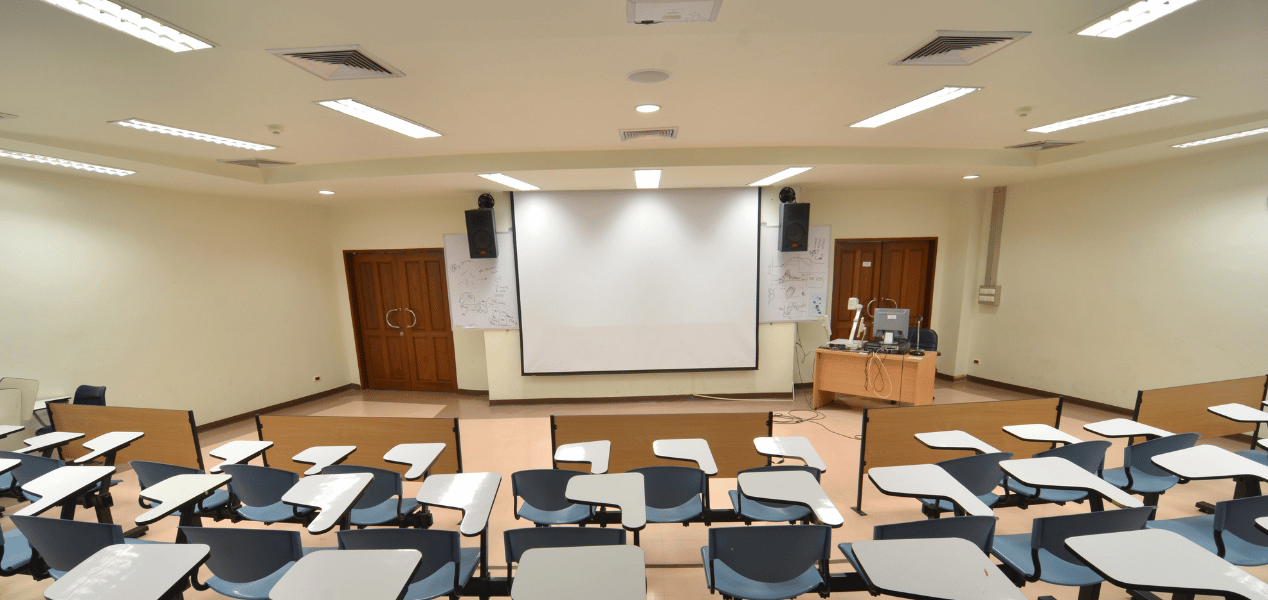
A classroom is a room shaped like a school room: fixed rows, a whiteboard wall, a lectern position. A class venue is any room you can teach in, and most paid classes want the second.
- Take a classroom: for exam review, certification courses and anything where every participant needs a writing surface facing one way. That format sits with the training rooms in the Philippines that rent by the hour.
- Take a class venue: for cooking, movement, craft and anything where participants move around or work in pairs.
- Company-run programmes with breakout groups and a full-day agenda belong with the training venues in the Philippines instead.
- Watch the furniture line: a room quoted with chairs is not a room quoted with tables. Table hire is billed separately in most listings.
- Watch the reset time: hourly rooms bill from your setup, not from your first participant. Ask for 30 minutes either side in writing.
Hourly Rates and Session Minimum Spend for Class Venues in the Philippines: How the Quote Is Built
Two pricing models run side by side in this category, and they suit different class shapes. An hourly rate buys the room; a minimum spend buys a total bill the venue needs to hit, usually with food counted in.
| Venue Category | Price Band (Per Session) |
|---|---|
| Bare studio or activity room | ₱1,500 to ₱5,000 per hour |
| Serviced apartment or hotel function room | ₱1,600 to ₱10,000 minimum spend |
| Cafe or co-working back room | ₱5,000 to ₱20,000 minimum spend |
| Demo kitchen or cooking space | ₱5,000 to ₱30,000 minimum spend |
| Garden, rooftop or clubhouse deck | ₱20,000 to ₱30,000 minimum spend |
- Hourly suits a repeat class: a weekly two-hour slot is cheaper to buy by the hour, and easier to move if a week gets cancelled.
- Minimum spend suits a one-off: a full-day workshop with lunch usually clears the figure on catering alone.
- Ask what the rate already carries: air-conditioning hours, chairs, a projector and basic sound are bundled in some rooms and billed in others.
- Overtime is the common overrun: most listings bill a part hour as a full hour after the agreed end time.
- Deposits: half on confirmation and the balance on the day is the usual pattern for independent spaces.
Cooking Class Venues in the Philippines: Kitchen Access, Wet Stations and Ingredient Handling
A cooking class lives or dies on what the room can actually cook, and most listings describe the kitchen in one line. The three things to confirm are heat, water and extraction.
- Heat: gas hobs, induction plates or nothing at all. Induction is common in mall units where gas lines are restricted.
- Water: one sink for a dozen participants turns a two-hour class into a queue. Ask how many wet stations the room has.
- Extraction: without a hood, frying and searing fill the room in minutes and the smoke alarm decides the rest.
- Cold storage: fridge and freezer access on the day, plus the option to drop ingredients off the night before.
- Waste and grease: ask who clears oil and food waste, because a cleaning surcharge is normal and worth knowing about first.
- Dedicated kitchens: rooms built for food work sit with the cooking venues in the Philippines that already carry the equipment list.
Movement, Yoga and Dance Class Floors in the Philippines: Flooring, Mirrors and Mat Storage
A movement class needs floor, not furniture, so the questions are physical rather than technical. Flooring type decides what the class can safely do.
- Flooring: sprung timber or vinyl for dance, level tile or timber for mat work. Carpet ends most movement formats.
- Ceiling height: overhead reaching, aerial work and jump sequences all need the height confirmed in metres, not adjectives.
- Mirrors: a full mirror wall is rarer than listings imply. Ask for a photo of the wall you'll teach against.
- Mat and prop storage: somewhere to stack between sessions, otherwise you're carrying kit in and out weekly.
- Shoes-off policy: check there's a rack and a changing corner before you take bookings.
- Regular yoga slots are better served by the yoga venues in the Philippines that already run this format weekly.
Craft, Art and Skills Workshops in the Philippines: Tables, Power and Mess Tolerance
A craft workshop is a table-and-power booking, and the mess tolerance of the room is what gets a booking refused. Ask about it before you describe the activity in a message.
- Table shape: long trestles for shared materials, round tables for pairs. Confirm how many the room actually holds.
- Power points: glue guns, kilns, sewing machines and laptops all draw at once. Ask for the number of sockets, not the number of walls.
- Floor protection: paint, resin and clay usually need a covered floor and a stated cleaning fee.
- Sink access: brush and hand washing between stages, which a meeting room rarely has.
- Multi-session workshops with breakout tables suit the workshop venues in the Philippines that take a full-day agenda.
Class Reunions and Graduation Batches in the Philippines: Why That Booking Belongs Elsewhere
A class reunion is a party with a guest list, not a class, and the room it needs is a different room. Sound, food service and a bar decide it, none of which a studio has.
- Batch reunions: seated dining, a programme and a sound system. Those sit with the graduation party venues in the Philippines.
- Homecoming weekends: December and the Holy Week break are the two peaks, so a reunion date competes with company parties.
- Catering: reunions almost always run on minimum spend, since the food is the bulk of the bill.
- Programme slot: a speech and an AVP need a screen and a mic, which an hourly studio bills as extras.
Permits, VAT and Service Charge on Class Venue Hire in the Philippines: What Lands on the Invoice
Charging admission changes the paperwork position, and the venue's own licence does most of the work. What you owe is mostly tax rather than permits.
- 12% VAT: confirm in writing that the quoted figure includes it. A full-day booking makes the difference material.
- Service charge: customarily 10% where a venue applies one, and Republic Act 11360 sends all of it to the staff.
- Mayor's permit: the venue holds it. A private class inside a licensed space normally rides on that.
- Barangay clearance: comes into play for public ticketing, outdoor signage or a session in a village clubhouse.
- Official receipt: ask for one at booking if you're claiming the hire as a business expense.
- Cancellation terms: independent spaces usually keep the deposit inside seven days of the date.
Getting a Class to a Venue in Metro Manila and Cebu: Number Coding, Rail and Arrival Windows
Start time is a logistics decision in Metro Manila, not a preference. Number coding and the two rush windows set it.
- Number coding: one plate ending is off the road each weekday, enforced across most of Metro Manila from 7am to 10am and 5pm to 8pm.
- Makati is the exception: a straight 7am to 7pm window, so an afternoon Makati class locks out anyone coded that day.
- Rail: MRT-3 runs the EDSA spine through Ayala, Guadalupe, Ortigas and Cubao; LRT-2 serves Katipunan and Araneta Center-Cubao; LRT-1 covers the Taft corridor down to Pasay.
- Best start times: 10.30am or 2pm sidesteps both coding windows.
- Cebu City: no coding scheme, so a morning start works. The event venues in Cebu City are the practical option for a Visayas class series.
- Parking: confirm slots per booking, since mall and hotel rooms cap what they release to an event.
- Hotel and mall rooms with a staffed lobby suit courier drops and late arrivals, and several sit among the function rooms in the Philippines that take class bookings.
What to Confirm Before You Take Bookings for a Class in the Philippines
| Attribute | What to Expect |
|---|---|
| Internet | Fibre standard in Metro Manila business districts, patchy in converted houses and garden venues. Ask for a speed test. |
| Power backup | Generator cover is common in hotels and malls, rare in independent studios. Confirm before a ticketed session. |
| AV | Projector, screen and a wired mic are bundled in function rooms and billed as extras in studio rooms. |
| Air-conditioning hours | Often capped to the booked window, with overtime billed per hour. |
| Nearest rail | MRT-3 for the EDSA corridor, LRT-2 for Katipunan and Cubao, LRT-1 for Taft and Pasay. Cebu City has no rail. |
| Parking | Slots per booking rather than per guest. Mall venues release a fixed allocation. |
| Step-free access | Reliable in malls and hotels, uncommon in converted houses and rooftop decks. |
| Kitchen | Induction more common than gas in mall units. Extraction is the limiting factor for frying. |
| Deposit | Typically half on confirmation, balance on the day, forfeited inside seven days. |
| Tax | 12% VAT, plus a service charge of customarily 10% where one applies. |
Why Class Hosts Book Through Venuerific in the Philippines
We've run venue bookings out of Singapore since 2013 and now cover five markets, the Philippines among them. Class hosts book the same rooms repeatedly, so the terms need to hold up on the second booking as well as the first.
- Zero booking fees: you pay the venue's own rate and nothing on top.
- Best price guarantee: if the same room is cheaper elsewhere, we'll match it.
- Direct host contact: hourly rates, kitchen specs and mat storage answered by the person who owns the room.
- Verified venue details: capacities, facilities and access confirmed on the listing rather than guessed.
- Vendor marketplace: caterers, stylists and photographers for the sessions that need them.
- Trusted by Microsoft, Grab, Deloitte, Huawei, AIA, Disney, KPMG, Salesforce and Marriott across our five markets.
- Smaller sessions that only need a table and a screen are quicker to fill from the meeting rooms in the Philippines.
Send an enquiry on any listing and the host replies direct, with the hourly rate, what the room already carries, and what you'd be hiring in.